Tree Fallen on Your Property? What to Do First
A tree has come down. Who to call (000, SES, Ausgrid), when Council approval isn't needed, what to photograph for insurance and who pays if it's a neighbour's.
Sam · Owner & Local Tree Care Lead
Updated 05 Oct 2026 · 7 min read
Key Takeaways
- 01Call 000 for danger to life, NSW SES on 132 500 for storm help and Ausgrid on 13 13 88 for wires
- 02Stay at least 8 metres from fallen power lines and anything touching them
- 03Council doesn't require a permit for a storm-fallen tree that is still dangerous, but photos are required
- 04A neighbour may not be liable for a storm-fallen tree unless they knew or should have known it was dangerous
On this page
Sections
The Short Answer
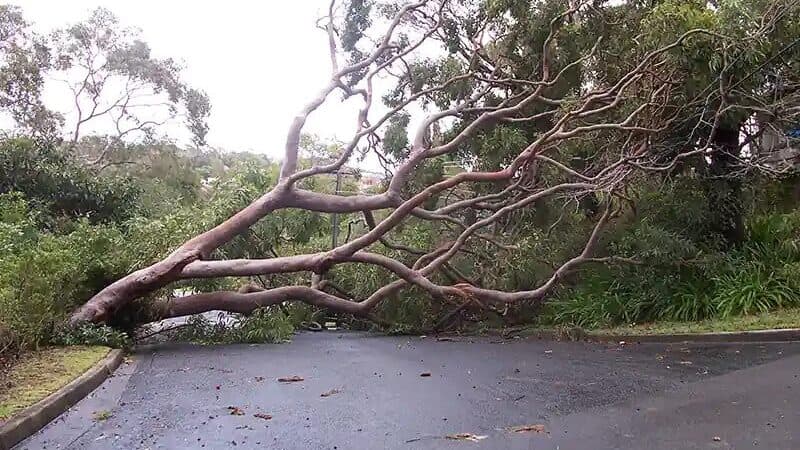
Get everyone away from the tree first, then call for the right help: Triple Zero (000) if anyone is trapped, injured or in a life-threatening situation, NSW SES on 132 500 for storm help, and Ausgrid on 13 13 88 if wires or poles are involved. Once the area is safe, photograph the damage, call your insurer and arrange a private tree team for the removal. On the Northern Beaches, Council generally does not require a permit to remove a tree that has fallen or partly fallen in a storm and is still dangerous, but it does require photos.
The First Five Minutes
A fallen tree is rarely finished moving. Trunks resting on a roof, fence or car can be under heavy tension, and broken branches can still be hanging in the canopy above you.
- Move people and pets away. Keep everyone well clear of the tree, the canopy above it and anything it is touching.
- Look for wires before you look at the damage. If a power line is down or a branch is touching wires, stay at least 8 metres away, or about two car lengths, and treat everything in contact with it as live.
- Call 000 if anyone is hurt or trapped. Do not try to free someone who may be in contact with electricity.
- Leave the building if it is unsafe. If the tree has come through the roof or walls, move to a safe part of the house or leave, and do not return to damaged rooms.
- Do not cut, pull or move the tree. NSW SES warns that trees across power lines may be electrified and not to try to remove them.
Who to Call, and When
| Situation | Who to call |
|---|---|
| Someone is trapped, injured or in danger of their life | Triple Zero (000) |
| A fallen tree is blocking a road, door or driveway | NSW SES on 132 500 |
| A tree may fall on your house or driveway | NSW SES on 132 500 |
| The roof is damaged or leaking | NSW SES on 132 500 |
| Wires are down, or a tree is on or touching power lines | Ausgrid on 13 13 88 (24 hours) |
| A street or park tree has fallen | Northern Beaches Council on 1300 434 434 |
| Removal and cleanup on private property | A private tree service, such as our team on 0425 350 004 |
These triggers come from the NSW SES When to call 132 500 guide. SES attends the most urgent calls first. Write down your reference number and keep your phone nearby. If you no longer need help, call back with the reference number so the crew can go to someone else.
What NSW SES does and does not do
NSW SES volunteers provide temporary help to make your home and situation safe. For permanent repairs and removing what is left, SES says to contact your insurer or a private contractor. That is where a tree service comes in.
If Power Lines Are Involved
Ausgrid's fallen powerlines advice is simple: stay at least 8 metres away, report it on 13 13 88 and call 000 if life is at risk. A tree lying across wires can itself be electrified, and fallen branches can hide damaged equipment underneath.
Do not touch the tree, a fence it is resting on, a car underneath it, or a person who may be in contact with it. Wait until the network operator has made the lines safe before any tree work starts nearby. Our team members are authorised for work near live electrical infrastructure, and we will check what controls are needed before we cut.
Do You Need Council Approval?
Often not, if the tree has genuinely fallen or meets another exemption, but check which one you are relying on. Northern Beaches Council's private-land tree page lists several that can apply after a storm:
- Storm-fallen trees: a tree that has fallen or partly fallen in a storm and still presents a danger can be removed without a permit. Council says photos are required, so take them before the tree is cut up.
- Dead trees: a dead tree that is not needed as habitat for native animals can be removed without a permit. Council recommends photographic evidence.
- Imminent danger: a tree certified by an AQF Level 5 arborist (or equivalent) as an imminent danger and high risk to life and property can be removed without consent. The owner needs written confirmation that states the arborist's qualification, declares the danger, recommends immediate removal, and a copy goes to Council for its records.
- Close to the house: a tree within 2 metres of an existing approved building, measured from the building to the base of the trunk, is exempt. Decks, pergolas, sheds and patios do not count.
A tree that is damaged but still standing and not an immediate danger may need a permit before it is removed or heavily pruned. Exemptions can also be affected by heritage listings, threatened species, development consent conditions and biodiversity mapping. If you are unsure, call Council's Tree Management Team on 1300 434 434. Our Northern Beaches tree permit guide explains the full rules.
Two practical points. Street trees and trees in parks belong to Council, so report them rather than having them cut privately. And the property owner deals with Council: we can explain which exemption may apply, but we do not lodge applications or notify Council for you.
Photos and Records for Your Insurer
Moneysmart's guide to claiming after a disaster suggests photographing or filming all the damage, taking safe and reasonable steps to prevent further damage, and lodging your claim as soon as possible. It also notes your insurer may need to authorise repairs and tradespeople before work happens, so ring early.
From a safe position, capture:
- The whole tree, showing where it came from and where it landed
- The base, root plate or break point, which shows whether it snapped or uprooted
- Every point of damage: roof, gutters, fence, car, paving
- Where the tree stood in relation to the boundary
- Date, time and weather conditions, plus any warnings or emails you received
Never move closer for a better picture. Where relevant, we can provide photographs and clear job documentation. Your insurer decides what evidence and costs it accepts, and whether tree removal is covered under your policy, so check the product disclosure statement.
When It Is a Neighbour's Tree
This is where people most often assume the wrong thing. Legal Aid NSW's guide to neighbour tree problems says that if a neighbour's tree falls on your property during a storm, your neighbour may not be responsible. They can only be responsible if they knew, or should have known, that the tree was dangerous.
In practice, that usually means:
- Start with your own insurer. Lodge the claim on your own home or contents policy. Your insurer can decide whether to seek recovery from anyone else.
- Talk to your neighbour. Share what happened and swap insurer details. Their insurer may need to be involved.
- Keep evidence. Photos, any earlier written concerns about the tree, an arborist's report and written repair quotes all help if responsibility is disputed. Legal Aid notes you generally have six years from the date of damage to claim compensation.
- Ongoing damage is different. If a neighbour's tree keeps causing damage, the Land and Environment Court can make orders under the Trees (Disputes Between Neighbours) Act 2006. See our guide to neighbours' trees in NSW.
If a Council tree damaged your property, Council's claims page says you can claim on your own policy or lodge a claim for compensation with Council, which then investigates whether it is liable. Get legal or insurance advice for your situation.
What Emergency Tree Work Involves
The first visit is about removing the danger, not finishing the whole job. That can mean taking a hanging branch down, lifting a trunk off a roof in controlled sections, clearing a blocked driveway or making the area stable until the rest can be done safely.
Tree crews treat storm-damaged trees with care because the wood can be loaded in unpredictable ways. Depending on the job, we may use rigging, an elevated work platform or a crane. Complete removal, stump grinding and final cleanup are often quoted and scheduled separately once the urgent risk is gone.
Emergency work may carry a 30 to 50 per cent premium because of the timing, crew mobilisation and unstable conditions. The emergency tree services page shows the general price ranges, and the work you approve sets out the agreed charges.
While You Wait
- Keep people, pets and cars away from the tree and the canopy above it
- Do not use a chainsaw on a fallen or loaded tree
- Stay out of damaged rooms and off the roof
- Keep your phone charged and nearby for SES, Ausgrid and your insurer
How We Can Help
Affordable Tree Services takes emergency calls and dispatches crews 24 hours a day, including weekends and public holidays, across the 47 Northern Beaches suburbs we cover. We aim to respond within two hours, although severe weather, road access and demand can affect timing. Call 0425 350 004 for urgent work.
For storm damage that is no longer urgent, we provide a free on-site assessment and a written quote, with no travel surcharge anywhere in our service area. Our tree removal service covers the rest of the job, and our dangerous tree signs guide can help you spot the next problem before the next storm.
Frequently Asked Questions
Call Triple Zero (000) if anyone is trapped, injured or in a life-threatening situation. Call NSW SES on 132 500 for storm help, Ausgrid on 13 13 88 if wires are involved, then a private tree service for removal.
Northern Beaches Council does not require a permit for a tree that has fallen or partly fallen in a storm and still presents a danger, but photos are required. Other controls can still apply, so check Council's private-land tree page if the tree is damaged but still standing.
Legal Aid NSW says a neighbour may not be responsible for storm damage unless they knew, or should have known, the tree was dangerous. Start a claim on your own policy and keep photos and repair quotes.
NSW SES provides temporary help to make your home and situation safe. For permanent repairs and removing the remaining tree, SES says to contact your insurer or a private contractor.
Emergency calls and crew dispatch are available 24/7. We aim to respond within two hours, although severe weather, road access and demand can affect timing.
Tree services across the Northern Beaches
Find tree services in your suburb:
Share this article
About the author
Sam
Owner & Local Tree Care Lead
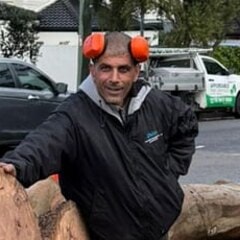
Sam owns and leads Affordable Tree Services Northern Beaches. He is the main point of contact for many customers and coordinates the right team, equipment and next steps for each job.
On this page