Palm Tree Removal Costs: Northern Beaches Price Guide (2026)
Thinking about removing palm trees from your Northern Beaches property? This guide covers costs for different palm species, council exemptions, cleaning vs removal options, and how to get the best price for palm tree services.
Affordable Tree Services Northern Beaches
8 min read

Key Takeaways
- Small palm cleaning costs $150-$250 while large Cocos palm cleaning costs $250-$450
- Small palm removal costs $300-$600 and large palm removal $600-$1,500
- Cocos palms are exempt from council regulations — no permit needed for removal
- Annual palm cleaning prevents pest harbourage and seed mess for a fraction of removal cost
- Palm stump removal adds $150-$300 to the overall cost
- Multiple palm discounts typically reduce per-palm pricing by 15-25%
- Regular palm cleaning is more cost-effective than dealing with neglect-related issues
Palm Trees on the Northern Beaches: A Love-Hate Relationship
Palm trees are one of the most recognisable features of the Northern Beaches landscape. From the towering Cocos Palms lining suburban streets in Dee Why and Manly to the elegant Bangalow Palms tucked into garden corners throughout Avalon Beach, palms have become deeply embedded in the character of the area.
However, many Northern Beaches homeowners find themselves weighing up the costs and benefits of keeping their palm trees versus having them removed. Ageing Cocos Palms drop heavy fronds and messy fruit clusters, Phoenix Palms harbour rats and cockroaches in their dense canopies, and neglected palms of any species can become unsightly and even hazardous.
Whether you are considering a single palm removal or planning to clear multiple palms from your property, understanding the costs involved is essential for making an informed decision. This guide provides current 2026 pricing for palm tree removal and maintenance services across the Northern Beaches, helping you budget appropriately and choose the right approach for your situation.
Common Palm Species on the Northern Beaches
Before diving into costs, it helps to understand which palm species are most common in the Northern Beaches and how they differ in terms of removal complexity and pricing.
Cocos Palm (Syagrus romanzoffiana)
The Cocos Palm is by far the most common palm species on the Northern Beaches. Originally from South America, these palms were planted extensively throughout Sydney suburbs from the 1970s onwards. They grow rapidly, reaching heights of 10 to 15 metres, and produce large quantities of orange fruit that stains driveways and attracts fruit bats. Cocos Palms are now classified as an environmental weed in many parts of New South Wales because their fruit is spread by birds and bats into bushland, where they outcompete native species.
Bangalow Palm (Archontophoenix cunninghamiana)
The Bangalow Palm is a native Australian species commonly found in the Northern Beaches, particularly in more sheltered garden settings. These graceful palms typically reach 10 to 15 metres and are characterised by their smooth, ringed trunks and arching fronds. Being native, they are generally subject to different council regulations than introduced species. For more on native species in the area, see our guide to popular Northern Beaches tree species.
Phoenix Palm (Phoenix canariensis)
Phoenix Palms, also known as Canary Island Date Palms, are large, heavy palms with thick trunks and dense crowns of sharp-spined fronds. They are among the most challenging palms to remove due to their weight and the hazardous nature of their frond spines. Phoenix Palms can grow to 15 metres or more and their canopies provide ideal habitat for pests including rats, possums, and cockroaches.
Alexandra Palm (Archontophoenix alexandrae)
Alexandra Palms are another popular species throughout the Northern Beaches, often planted in clusters for a tropical effect. They are similar in appearance to Bangalow Palms but have a slightly broader crown and lighter green fronds. These palms typically reach 8 to 12 metres and are relatively straightforward to remove compared to Phoenix Palms.
Palm Tree Removal Costs by Species and Size
Palm removal costs on the Northern Beaches vary depending on the species, height, trunk diameter, and site conditions. The following price ranges reflect typical costs for professional palm removal in 2026, including felling, sectioning, and removal of all debris from site.
Small Palms (Under 5 Metres): $300 - $600
Small palms are the most affordable to remove. At this height, they can usually be felled in one piece or cut into a few manageable sections. The trunk is relatively light and the root ball is not yet deeply established. Small palm removal is typically a quick job, often completed within an hour by a two-person crew.
- Cocos Palm (under 5m): $300 - $500
- Bangalow Palm (under 5m): $350 - $550
- Alexandra Palm (under 5m): $300 - $500
- Phoenix Palm (under 5m): $400 - $600 (heavier trunk and spiny fronds)
Medium Palms (5 - 10 Metres): $600 - $1,200
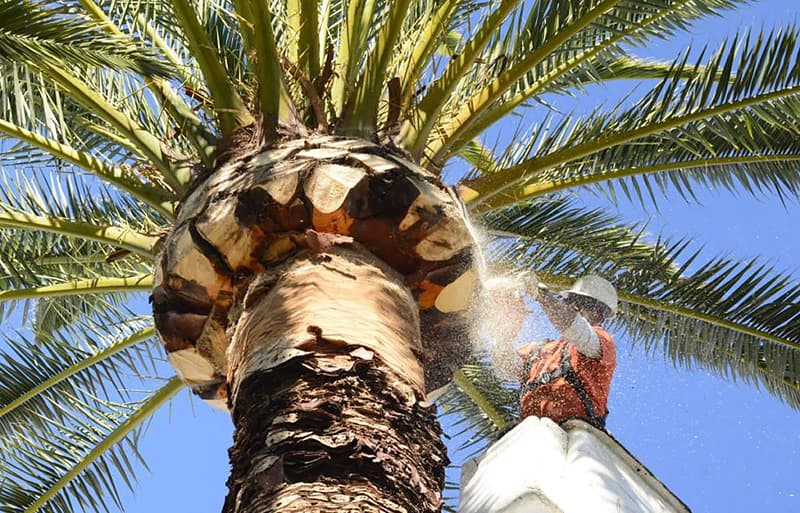
Medium-height palms require more labour and often need to be sectioned from the top down, particularly if they are close to structures, fences, or power lines. A climber or elevated work platform may be needed, which adds to the overall cost.
- Cocos Palm (5-10m): $600 - $900
- Bangalow Palm (5-10m): $650 - $950
- Alexandra Palm (5-10m): $600 - $900
- Phoenix Palm (5-10m): $800 - $1,200 (significantly heavier)
Large Palms (10 Metres and Over): $1,200 - $2,500
Large palms present the greatest removal challenges. Tall Cocos Palms and Phoenix Palms at this height require experienced climbers, specialised rigging equipment, and careful sectional dismantling. The sheer volume of debris from a large palm is also considerable, adding to disposal time and cost.
- Cocos Palm (10m+): $1,200 - $1,800
- Bangalow Palm (10m+): $1,200 - $1,800
- Alexandra Palm (10m+): $1,200 - $1,700
- Phoenix Palm (10m+): $1,500 - $2,500 (heaviest and most difficult)
Multiple palm discount: If you have several palms to remove, most professional services (including ours) offer a per-palm discount of 15-25% when removing three or more palms in the same visit. Call us on 0425 350 004 for a package quote.
For a broader understanding of tree removal pricing in the area, our tree removal cost guide covers all species and sizes.
Palm Cleaning vs Palm Removal: Which Is Better Value?
Not every palm tree needs to be removed. In many cases, regular palm cleaning is a more cost-effective approach that keeps your palms looking tidy and reduces the risks associated with falling fronds and fruit.
Palm Cleaning Costs
Palm cleaning involves removing dead fronds, seed pods, and fruit clusters from the canopy. This is typically done annually or biannually depending on the species and your preferences.
- Small palms (under 5m): $150 - $250 per clean
- Medium palms (5-10m): $250 - $350 per clean
- Large palms (10m+): $350 - $450 per clean
- Phoenix Palm cleaning: $50-$100 premium due to sharp spines
When Cleaning Is Better Value
Regular palm cleaning makes financial sense in the following situations:
- The palm is a native species (Bangalow, Cabbage Tree) that contributes to local biodiversity
- The palm is structurally sound and in good health
- The palm provides valued shade, privacy screening, or aesthetic appeal
- You enjoy the tropical character the palm brings to your garden
- The palm is protected under council regulations (non-exempt species)
An annual cleaning programme typically costs $150 to $450 per palm per year. Over a five-year period, that amounts to $750 to $2,250 — which may be less than or comparable to the one-off cost of removal and replacement planting.
When Removal Is the Better Option
Palm removal makes more sense when:
- The palm is a Cocos Palm (environmental weed) with no council protection
- Fruit drop is causing ongoing staining, mess, or attracting vermin
- The palm is leaning dangerously or showing signs of decline
- Fronds are repeatedly falling onto roofs, cars, or walkways
- The palm has outgrown its location and is interfering with structures or power lines
- You want to reclaim garden space for other planting
- Pest harbourage (rats, cockroaches) in the canopy is a recurring problem
Learn more about our comprehensive palm tree services, including both cleaning and removal options.
Council Regulations for Palm Removal on the Northern Beaches
One of the most common questions we receive is whether a council permit is needed to remove a palm tree. The answer depends on the species and your property's specific circumstances. Understanding the regulations can save you time, money, and potential fines.
Cocos Palms: Generally Exempt from Council Permits
Good news for property owners dealing with unwanted Cocos Palms: Northern Beaches Council generally does not require a permit for the removal of Cocos Palms (Syagrus romanzoffiana). Because they are classified as an environmental weed, their removal is typically encouraged rather than restricted. This exemption applies to most residential properties, though there may be exceptions in heritage conservation areas or where specific Development Application conditions apply.
Other Palm Species: May Need Council Approval
Native palm species such as Bangalow Palms and Cabbage Tree Palms are generally protected under Northern Beaches Council's tree preservation regulations. If the palm exceeds certain height or canopy spread thresholds, you will likely need to submit a tree removal application before any work can proceed. Phoenix Palms and Alexandra Palms fall into a grey area and may or may not require approval depending on their size and location.
Heritage-Listed Areas: Additional Requirements
Properties within heritage conservation areas across the Northern Beaches may face additional restrictions on palm removal, even for species that are otherwise exempt. If your property is heritage-listed or within a conservation area, it is worth checking with council before proceeding. Our team can advise you on whether your palm removal is likely to require approval. For detailed information on the permit process, see our Northern Beaches tree permit guide.
Not sure whether your palm needs a permit? Call us on 0425 350 004 and we can advise you based on the species, size, and location of your palm tree. If a permit is needed, our arborists can prepare the supporting documentation for your application.
Factors That Affect Palm Removal Costs
Beyond species and height, several site-specific factors can influence the final cost of palm removal on the Northern Beaches.
Access to the Palm
Palms located in rear gardens with narrow side access, behind pools, or on sloped blocks are more expensive to remove. If the debris cannot be easily carried to a chipper or truck at the street, the additional labour time pushes the cost up. Conversely, palms with clear, open access and room for equipment are quicker and cheaper to remove.
Proximity to Structures
Palms growing close to houses, garages, pool fences, pergolas, or power lines require more careful and time-consuming removal techniques. Sectional dismantling with rigging may be necessary to prevent damage, adding to both labour and equipment costs. This is particularly relevant for tall palms in tight suburban blocks throughout suburbs like Dee Why, Manly, and Avalon Beach.
Root System and Stump
Palm tree root systems differ from conventional trees. Most palms have a fibrous root ball rather than the spreading lateral roots of hardwood trees. Palm stump removal typically costs $150 to $300 and can be done by grinding the stump below ground level. Some homeowners choose to leave the stump to decay naturally, which avoids this additional cost but can take several years. For more on stump removal, see our stump grinding services.
Number of Palms
Removing multiple palms in a single visit is significantly more cost-effective per palm than removing them individually. Setup and travel costs are shared across all the palms, and the crew can work more efficiently when processing several palms in sequence. A property with five Cocos Palms, for instance, might pay $350 to $500 per palm rather than $500 to $800 for a single palm removal.
Debris Volume and Disposal
Palm trees produce a surprising volume of waste material. A large Cocos Palm can generate several cubic metres of fronds, trunk sections, and seed clusters. All of this needs to be chipped, loaded, and removed from site. The disposal cost is typically included in the quoted price, but properties with multiple large palms may see higher quotes due to the sheer volume of material.
What to Plant Instead of a Palm Tree
If you are removing palms and want to replace them with something that suits the Northern Beaches environment, there are several excellent alternatives to consider.
Native Palm Alternatives
If you love the look of palms but want a species that is better behaved and more ecologically appropriate, consider these native options:
- Bangalow Palm (Archontophoenix cunninghamiana): A graceful native palm that produces far less mess than a Cocos Palm. Grows to 10 to 15 metres and is well-suited to sheltered garden positions.
- Cabbage Tree Palm (Livistona australis): A hardy Australian native with distinctive fan-shaped fronds. Tolerates a wide range of conditions including coastal exposure and is an excellent habitat plant for native birds.
Non-Palm Alternatives
For a different look that still works well in the Northern Beaches climate:
- Coastal Banksia (Banksia integrifolia): Extremely salt-tolerant, low-maintenance, and provides food for native birds
- Frangipani (Plumeria): Deciduous, compact, and produces stunning fragrant flowers through summer
- Tuckeroo (Cupaniopsis anacardioides): A neat, evergreen native tree ideal for smaller gardens and screening
- Lilly Pilly (Syzygium smithii): Dense evergreen foliage, excellent for hedging and privacy
Our arborists can recommend the best replacement species for your specific garden conditions. Get in touch for personalised advice.
How to Get the Best Price for Palm Removal
There are several practical steps you can take to ensure you get good value when having palms removed from your Northern Beaches property.
- Get multiple quotes: We always recommend obtaining at least two to three quotes to compare pricing and inclusions. Make sure each quote covers the same scope of work.
- Bundle multiple palms: If you have several palms, have them all done at once for the best per-palm rate.
- Combine with other tree work: If you also need pruning, tree removal, or stump grinding on other trees, bundling all the work together often results in a package discount.
- Clear access beforehand: Moving garden furniture, pot plants, and other obstacles away from the work area saves the crew time and can reduce your quote.
- Be flexible on timing: If your palm removal is not urgent, booking during quieter periods (typically winter months) may attract lower rates.
- Check insurance and qualifications: Always ensure the company is fully insured with public liability and workers compensation coverage. Uninsured operators may be cheaper, but you carry the risk if something goes wrong.
For a comprehensive overview of what tree services cost across the board, read our tree services costs guide.
Frequently Asked Questions About Palm Tree Removal Costs
How much does it cost to remove a Cocos Palm on the Northern Beaches?
Cocos Palm removal typically costs between $350 and $800 for a single palm, depending on height. Small Cocos Palms under 5 metres cost $300 to $500, while large specimens over 10 metres range from $1,200 to $1,800. Multi-palm discounts of 15-25% apply when removing three or more Cocos Palms in the same visit.
Do I need a council permit to remove a palm tree?
Cocos Palms are generally exempt from Northern Beaches Council permit requirements because they are classified as an environmental weed. Native palm species such as Bangalow Palms and Cabbage Tree Palms are typically protected and may require a permit for removal. If you are unsure, our team can advise you on the specific requirements for your palm species and property.
Is it cheaper to clean a palm tree or remove it?
Annual palm cleaning costs $150 to $450 per palm, while removal is a one-off cost of $300 to $2,500 depending on size. Over five to ten years, regular cleaning can add up to more than the cost of removal. If you are spending $350 per year cleaning a large Cocos Palm, removal at $1,200 to $1,800 pays for itself within four to five years, and you eliminate the ongoing maintenance burden permanently.
How long does palm tree removal take?
A single small to medium palm can be removed in one to two hours. Large palms in difficult access locations may take half a day. When removing multiple palms on the same property, allow a full day for four to six palms including all cleanup and debris removal.
Can I remove a palm tree myself?
We strongly advise against DIY palm removal for any palm over 3 metres in height. Palm trunks are heavy and unpredictable when falling, and Phoenix Palm fronds have sharp spines that cause serious puncture wounds. Professional arborists have the equipment, training, and insurance to carry out the work safely. Read our guide on DIY vs professional tree services for more on when to call in the experts.
What happens to the palm stump after removal?
After the palm is felled and the trunk removed, you are left with a stump at ground level. Palm stumps can be ground out using a stump grinder for $150 to $300, which removes the stump to approximately 200mm below ground level. Alternatively, you can leave the stump to decompose naturally, though this process takes two to five years depending on the species and conditions. Most homeowners opt for stump grinding to reclaim the garden space immediately.
Ready to get a quote for palm tree removal or cleaning on the Northern Beaches? Call us on 0425 350 004 or request a free quote online. We provide obligation-free on-site assessments and transparent pricing for all palm tree services.
Professional Tree Services Across the Northern Beaches
Our qualified arborists provide expert tree care throughout Sydney's Northern Beaches suburbs:
Affordable Tree Services Northern Beaches
Experienced Tree Professionals
Our experienced arborists have over 30 years of experience providing professional tree services across Sydney's Northern Beaches. We're committed to delivering safe, environmentally responsible, and high-quality tree solutions for residential and commercial properties throughout the Northern Beaches and surrounding suburbs.