Tree Lopping and Pruning Cost Northern Beaches: 2026 Guide
Tree pruning and lopping prices on the Northern Beaches in 2026, the difference between pruning, reduction and topping, Council's 10% rule and when to prune.
Tree pruning
| Pruning work | Guide price |
|---|---|
| Small Tree PruningLight trimming, shaping or deadwood removal on smaller trees with straightforward access. | $250–$500 |
| Medium Tree PruningSelective pruning on a medium tree, such as clearance, thinning, reduction or deadwood removal. | $500–$1,000 |
| Large Tree PruningMature trees that need climbing, an elevated platform or more involved canopy work. | $1,000–$2,000 |
| Several TreesA combined visit for several trees. The exact price depends on the work required on each tree. | $1,500–$4,000 |
Tree lopping (controlled reduction)
| Reduction work | Guide price |
|---|---|
| Light ReductionSelected branch shortening or light reduction on a smaller tree with straightforward access. | $400–$800 |
| Moderate ReductionControlled height or spread reduction on a medium tree, planned around suitable growth points. | $800–$1,500 |
| Major ReductionMore involved work on a large or overgrown tree. Staged pruning may be recommended where one heavy cut would be unsuitable. | $1,500–$3,000 |
| Several TreesA combined visit for several trees. The exact price depends on the work required on each tree. | $2,000–$5,000 |
General guide prices only. Your written quote states the agreed cuts, equipment, debris handling and cleanup. Ask about combined pricing when several trees need work.
Sam · Owner & Local Tree Care Lead
Updated 05 Oct 2026 · 8 min read
Key Takeaways
- 01Pruning guide prices start at $250–$500; controlled reduction starts at $400–$800
- 02Council allows up to 10% of a tree's canopy to be pruned in 12 calendar months to AS 4373-2007 without a permit
- 03Council will not permit rough lopping or topping; our lopping is controlled reduction to suitable growth points, within Council's limits
- 04The reason for pruning matters more than the month; dangerous branches should not wait
On this page
Sections
The Short Answer
Tree pruning on the Northern Beaches starts in the $250–$500 band for light work on a smaller tree and reaches $1,000–$2,000 for a large tree that needs climbing or an elevated platform. Lopping, which we carry out as controlled height or spread reduction, starts at $400–$800 for a light reduction and reaches $1,500–$3,000 for major work on a large or overgrown tree. The guide prices above are a starting point: the tree, how much needs to come off, access and cleanup set the actual figure in your written quote.
Pruning, Lopping and Topping: What You Are Paying For
The words get used loosely, but they describe different jobs with different prices.
Pruning
Pruning removes selected branches for a clear reason: deadwood, a branch rubbing on the roof, clearance over a driveway, thinning to let light through, or shaping a young tree so it grows a sound structure. Each cut is made at a suitable point so the tree can respond well. Because less material comes off and less rigging is usually needed, pruning generally costs less than reduction work on a tree of the same size.
Lopping, or controlled reduction
Most people say "lopping" when a tree has become too tall, too wide or too close to the house. When we quote for lopping, the work is controlled reduction: shortening the height or spread back to suitable growth points, planned to the Australian Standard for pruning. It involves more cuts, more branch lowering and more material than selective pruning, which is why the reduction bands start higher.
Topping
Topping means cutting the top off a tree or stubbing large branches without regard to growth points. It is cheap and fast on the day, but it can leave a tree stressed, unbalanced and prone to weak regrowth, which often costs more to manage later. We do not top trees. Northern Beaches Council also lists "requests for lopping or topping of trees" among the things it will not permit, and it will not permit pruning contrary to the Australian Standard. In plain terms: if a quote describes hacking the top out of a tree, treat it as a red flag.
The standard that applies
Pruning in Australia is guided by AS 4373-2007, Pruning of amenity trees. Standards Australia currently lists the 2007 edition as pending revision, and it is the version Council's rules refer to. Ask any tree service whether its pruning is carried out to AS 4373. Ours is.
How the Guide Prices Work
The pruning bands above step up with tree size and how involved the canopy work is. Light trimming, shaping or deadwood removal on a smaller tree with straightforward access usually sits in the first band. Selective pruning on a medium tree, such as clearance, thinning, reduction or deadwood removal, sits in the second. Mature trees that need climbing, an elevated work platform or more involved canopy work move into the large-tree band.
The reduction bands follow the same pattern. A light reduction shortens selected branches on a smaller tree. A moderate reduction brings down the height or spread of a medium tree to suitable growth points. A major reduction is more involved work on a large or overgrown tree, and staged pruning over more than one visit may be recommended where one heavy cut would harm the tree.
Both guide tables above include a band for several trees: $1,500–$4,000 for pruning and $2,000–$5,000 for reduction. Combining trees into one visit saves setup time, and multi-tree discounts are available, so list every tree you are thinking about when you ask for a quote.
What Changes the Price
Tree size, species and condition
Height, canopy spread and branch weight decide how long the job takes. Species matters too: some trees tolerate pruning better than others, and Council gives figs as an example of trees that can be damaged by heavy pruning. A tree with dead or weak branches may need more careful handling.
How much needs to come off
A few dead branches is a short job. Reducing a whole canopy is a long one. Be clear about what you want to achieve, whether it is light, clearance, a view, safety or a smaller tree overall, so the quote matches the result rather than a guess.
Access and equipment
Climbing gear and ropes suit many trees. Others need an elevated work platform, especially where the canopy hangs over a roof or the tree has no safe climbing structure. Steep blocks and narrow side paths add carrying time for branches.
Power lines and nearby structures
Branches near wires, roofs, pools and fences have to be lowered rather than dropped. Our team members are authorised for work near live electrical infrastructure, but the planning still adds time.
Debris handling
Chipping, removal, raking, cleanup and leaving mulch on site all depend on the written quote. Woodchip left on site for your garden can be a sensible option, so ask about it.
Council's 10 Per Cent Pruning Rule
Northern Beaches Council currently allows reasonable pruning of up to 10 per cent of a tree's canopy within 12 calendar months without a permit, provided the pruning follows AS 4373-2007. Council also allows the removal of deadwood and of mistletoe or other parasitic plants without a permit. Check the current Council rules before any work, because the details are Council's to decide.
What this means in practice:
- Ten per cent is not much. A clearance prune off one side of a tree may fit. A full reduction usually removes more and may need a permit unless another exemption applies to the tree.
- Earlier pruning counts. The limit is up to 10 per cent within 12 calendar months, so a second round of pruning a few months after the first counts towards the same limit.
- Some trees need a permit regardless. Council lists heritage items, trees in heritage conservation areas, threatened species and trees that a development consent requires to be kept.
- Hedges are treated differently. Council's exemptions cover pruning or removing hedges (two or more trees planted to form a hedge, at least 2.5 metres tall) unless a development consent says the hedge must be retained.
- A permit costs money and time. Council's 2026–27 fee is $201 for an application, including assessment of the first tree, and $58.50 for each additional tree.
We will tell you whether the pruning you want looks likely to fit within the exemption and explain the next step if it does not. The property owner makes any application; we do not lodge applications or deal with Council on your behalf. If the branches belong to a neighbour's tree, read our guide to a neighbour's tree overhanging your property first.
When Is the Best Time to Prune?
There is no single best month for every tree on the Northern Beaches. The reason for pruning matters more than the calendar.
- Safety problems should not wait. A dead, split or hanging branch over a house, path or driveway should be looked at now, whatever the season. Our guide to dangerous tree signs explains what to look for.
- Clearance is easier early. Branches touching a roof, gutter or wires are cheaper to deal with before they grow heavier or cause damage.
- Size management suits planning. A large reduction may be split into stages, which can also keep each visit within what the tree can tolerate.
- Flowering and fruiting trees need timing. Pruning at the wrong point in the cycle can remove the buds that would have flowered or fruited. Identify the tree and the result you want first.
- Deciduous trees such as jacarandas and liquidambars show their branch structure most clearly when bare, which can make structural pruning easier to plan.
- Flowering trees are generally pruned soon after flowering, so the next season's buds have time to form.
- Figs and other sun-sensitive trees can be damaged when heavy pruning exposes bark to strong sun. Council gives figs pruned by more than 10 per cent as an example, so keep summer work on them light.
- Wildlife comes first. Check for active nests and hollows before work starts and plan around them.
- Stressed trees may be better left until conditions improve, unless safety means the work cannot wait.
Seasonal pruning calendars written for the Northern Hemisphere often do not suit Sydney's climate or Australian native trees, so be wary of rules of thumb that ignore the species.
There is also a price angle to timing. Routine pruning booked ahead avoids the rush after a big storm, when emergency work may carry a 30 to 50 per cent premium. Grouping several trees into one planned visit also attracts multi-tree pricing.
What to Ask For in the Written Quote
- Each tree included and the work on each one, described clearly enough to point to on the day
- The pruning objective, such as clearance from the roof or deadwood removal
- Confirmation the work will follow AS 4373
- Whether the work is expected to fit within Council's exemptions, or needs a permit first
- The equipment, such as an elevated work platform
- Debris handling: chipped, removed or left as mulch
- Whether staged work is recommended, and how each stage is priced
- The total price
Photos That Help Us Quote Accurately
- The whole tree, from far enough back to show its full height
- The branches you want pruned, and what they are touching or overhanging
- The trunk and base
- Any power lines near the canopy
- The access route from the street, including the narrowest gate or path
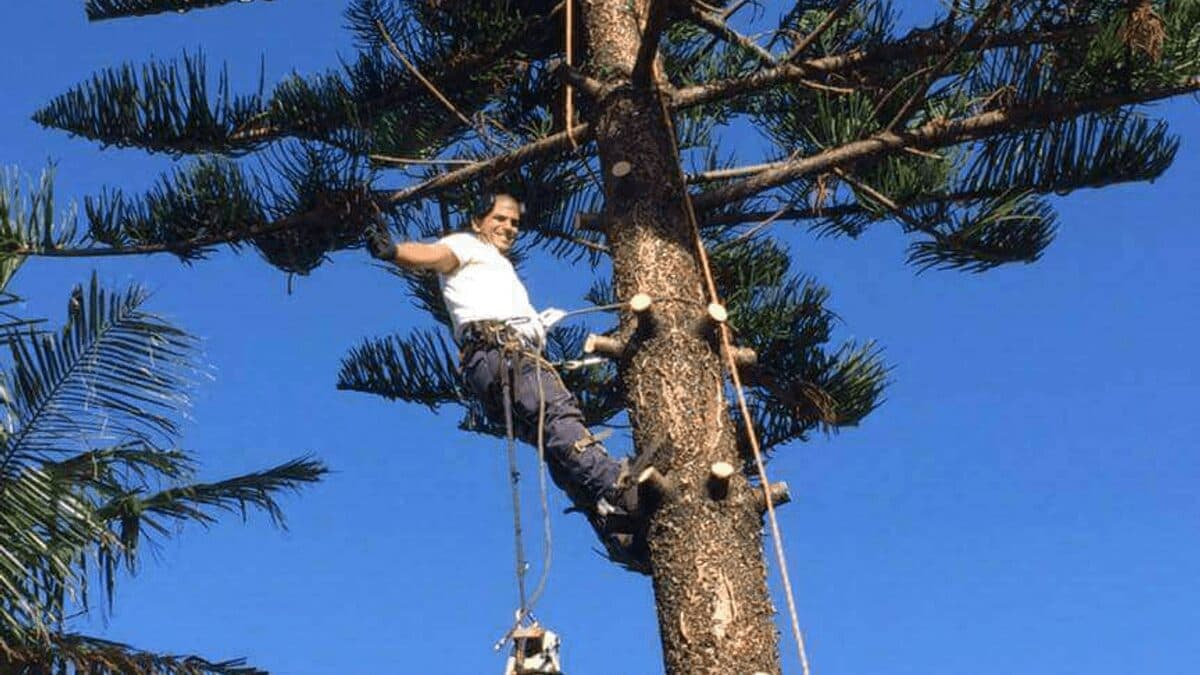
Tell us what you want to achieve in a sentence or two. Our Belrose pruning job shows the kind of selective work that keeps a tree in place beside the home.
How to Compare Quotes Fairly
Line up the scope before the price. One quote might cover deadwood only while another includes a full reduction and woodchip removal. Check that each quote names the same trees, the same amount of work and the same cleanup, and that each business is insured and can explain the qualifications of the people doing the work. Our team members include AQF Level 3 and AQF Level 5 qualified arborists. A very low price for a big reduction can mean topping, so ask exactly how the cuts will be made.
How We Can Help
We offer free on-site assessments and written quotes for tree pruning and tree lopping and controlled reduction across the Northern Beaches, with no travel surcharge in the 47 suburbs we cover. We will explain what Council's rules mean for your tree before you commit.
If a branch has broken or a tree is unsafe right now, call us on 0425 350 004. Our emergency service runs 24/7 and we aim to respond within two hours.
Frequently Asked Questions
Our guide prices start at $250–$500 for light work on a smaller tree and reach $1,000–$2,000 for a large tree needing climbing or an elevated platform. Several trees in one visit sit at $1,500–$4,000.
Pruning removes selected branches for a clear reason, such as deadwood or clearance. What most people call lopping is a larger reduction in height or spread, which we carry out as controlled reduction to suitable growth points, never rough topping.
Northern Beaches Council currently allows reasonable pruning of up to 10% of a tree's canopy within 12 calendar months, carried out to AS 4373-2007, plus deadwood and mistletoe removal. Check the current Council rules for your tree.
There is no single best month. Dangerous branches should be dealt with promptly, flowering and fruiting trees need timing around their cycle, and larger reductions can be planned and staged.
Council lists requests for lopping or topping among the things it will not permit, and pruning must follow AS 4373. We do not top trees.
Tree services across the Northern Beaches
Find tree services in your suburb:
Share this article
About the author
Sam
Owner & Local Tree Care Lead
Sam owns and leads Affordable Tree Services Northern Beaches. He is the main point of contact for many customers and coordinates the right team, equipment and next steps for each job.
On this page